

How to properly prepare compressed air? A complete guide for industry.
/ 5 Reviews :
Compressed Air Preparation – How to Select the Right Air Preparation Unit?
Properly prepared compressed air is essential for the reliable and efficient operation of pneumatic systems. Air quality, stable pressure, and the correct selection of components directly affect the durability of cylinders, valves, grippers, and other industrial automation elements.
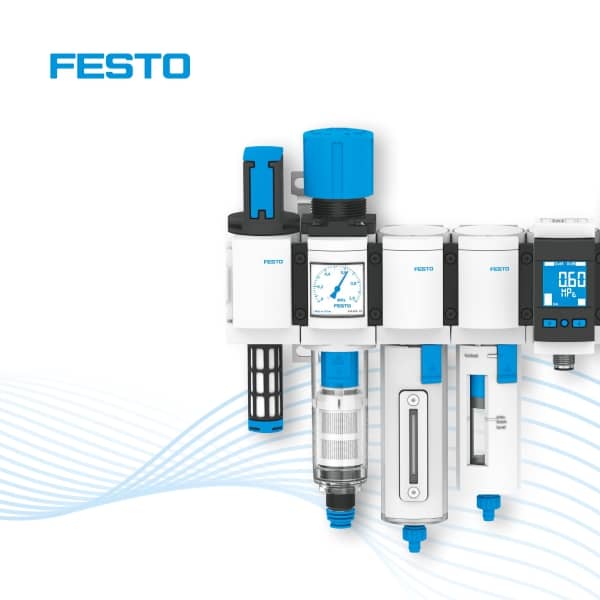
Air preparation units are responsible for filtration, pressure regulation, condensate separation, air drying, and monitoring pneumatic system operating parameters. A properly selected configuration helps reduce component wear, minimize the risk of failures, and improve overall system efficiency.

1. What Functions Should an Air Preparation Unit Perform?
Modern compressed air preparation systems combine several key functions responsible for the quality and safety of pneumatic installations.
- Pressure regulation – maintaining stable operating pressure within the system.
- Contaminant filtration – removing dust, solid particles, and oil aerosols.
- Condensate separation – eliminating moisture and water from compressed air.
- Air drying – lowering the dew point in demanding applications.
- Parameter monitoring – controlling flow and pressure using sensors.
- Safety functions – soft-start valves and rapid exhaust systems.
.jpg)
The selection of appropriate components depends on application requirements, system performance, and the required compressed air cleanliness class.

2. How to Select the Performance of an Air Preparation Unit?
Correctly matching system performance directly affects the effectiveness of the entire pneumatic installation. An undersized component may restrict flow and reduce efficiency, while an oversized system may negatively impact the effectiveness of certain functions, such as condensate separation.
When selecting an air preparation unit, the following should be considered:
- total compressed air demand of the installation,
- flow rate of all system components,
- required operating pressure,
- environmental conditions and system operating intensity.
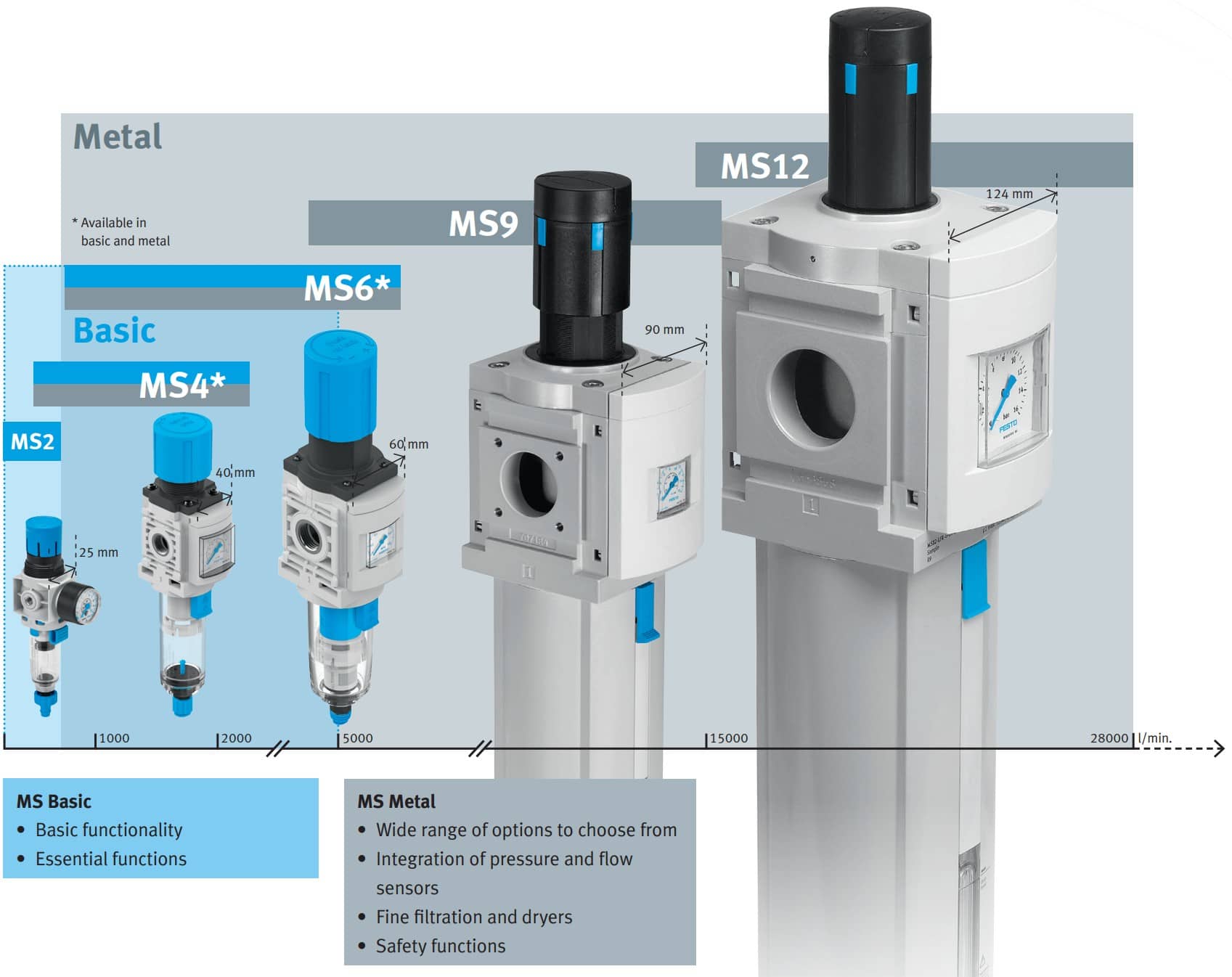
A properly selected configuration ensures stable machine operation while reducing operating and maintenance costs.

3. Manual or Electric Control?
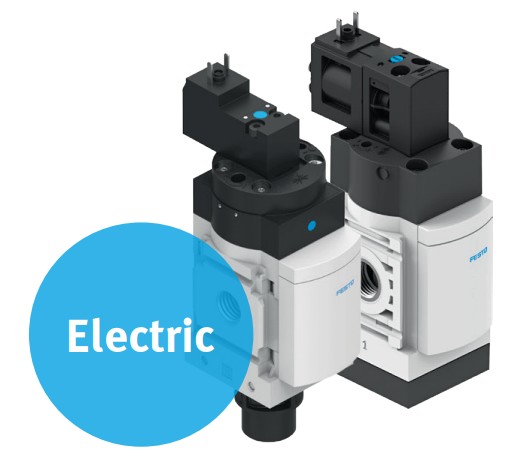
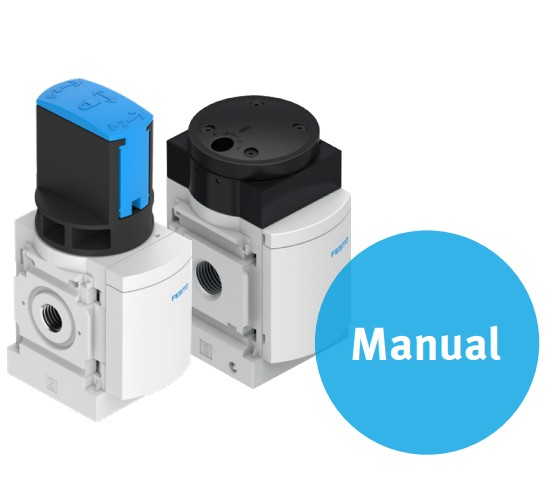
Depending on the level of system automation, manual, electric, or hybrid control solutions may be used. In modern industrial systems, electric control valves with PLC integration and Industry 4.0 compatibility are increasingly common. Applications requiring a high level of safety use safety valves equipped with soft-start and controlled exhaust functions. These solutions help ensure safe machine startup and shutdown procedures.
| Criteria | Electric Control | Manual Control |
|---|---|---|
| Automation Level | Suitable for automated processes and PLC integration. | Suitable for simple and/or standard applications. |
| Frequency of Use | Recommended for systems requiring frequent and irregular switching. | Recommended for systems that are rarely switched on and off. |
| Accessibility | Recommended for hard-to-access installations. | Recommended for easily accessible installations. |
| Integration with Management Systems | Required for monitoring, remote control, and Industry 4.0 applications. | Sufficient where centralized monitoring is not required. |

4. What Compressed Air Quality Is Required?
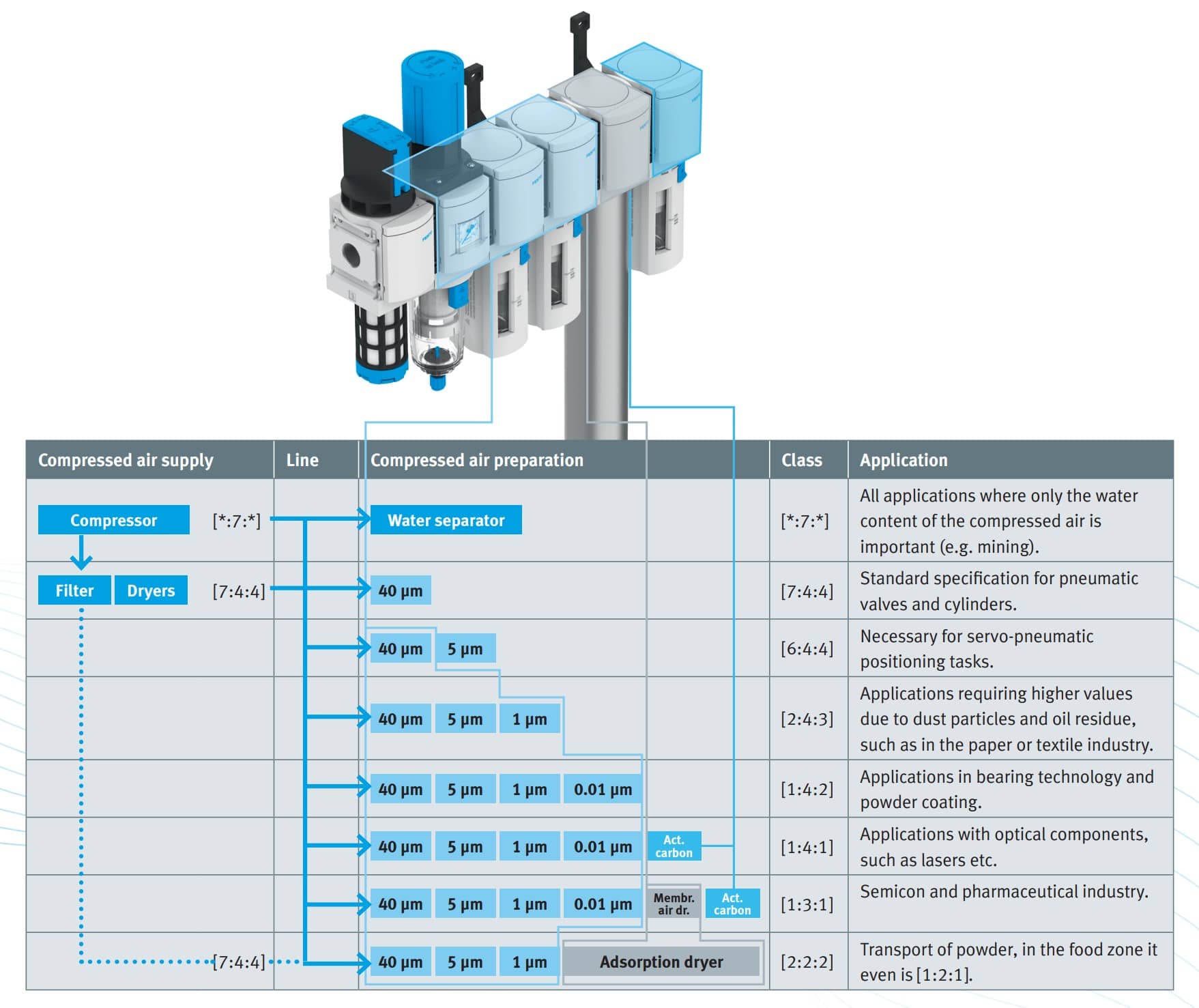
Compressed air quality is crucial for the durability and proper operation of pneumatic components. Contaminants, moisture, and oil may lead to accelerated wear and system failures. Compressed air quality classes are defined according to ISO 8573-1:2010. Depending on the application, cleanliness requirements may vary significantly – from standard pneumatic systems to food, pharmaceutical, or semiconductor applications where the requirements are much higher. In the air treatment process, the most important factors are air drying, condensate separation, and compressed air filtration.
1. Condensate Separation and Air Drying
Water separators effectively remove condensate from compressed air by using centrifugal force. In applications requiring dry air, membrane or adsorption dryers are additionally used to lower the dew point and improve air quality.
2. Compressed Air Filtration
Depending on quality requirements, different filtration levels are used:
- basic filters for removing larger particles,
- fine filters for precise contamination removal,
- activated carbon filters for removing oil aerosols and odors.
High-quality filtration helps extend the service life of pneumatic systems and reduce downtime risk.

5. Modular Air Preparation Systems
Modern compressed air preparation units are available as modular systems that can be freely configured depending on application requirements. Individual elements such as filters, pressure regulators, safety valves, dryers, and flow sensors can be combined into complete ready-to-install systems. Modular solutions provide high design flexibility and allow easy future expansion of pneumatic installations.
Why Is Proper Compressed Air Preparation So Important?
Proper compressed air preparation increases the reliability of pneumatic systems, reduces maintenance costs, and extends component lifespan. Correctly selected air preparation units improve workplace safety, process stability, and the efficiency of the entire installation.
Thanks to a wide range of available components, it is possible to create systems suitable for both standard industrial applications and advanced processes requiring the highest compressed air quality.
Visit www.albeco.com.pl and discover our wide range of FESTO air preparation solutions.

Learn more about the possibilities offered by FESTO products:
Przemysław Węglarek
Team Leader - Pneumatics & Industrial Hydraulics
 |
[email protected] |
 |
+48 61 60 00 196, +48 538 127 005 |
Tomasz Klejda
Technical Specialist - Pneumatics & Industrial Hydraulics
|
[email protected] |
|
+48 61 60 00 150 |
Read more

Albeco is FESTO's official partner

FESTO SDBT-MSX - new limit position sensor

Festo - products worth knowing